Why Video Conferencing Has Become Essential for Modern Workplaces
Over the past decade, video conferencing has evolved from a niche boardroom technology into a core communication tool for businesses worldwide.
Today’s organisations rely on video meetings to connect employees, collaborate with partners, and engage with customers across different locations. Whether supporting hybrid work environments, enabling global collaboration, or reducing travel costs, video conferencing is now a fundamental part of modern business infrastructure.
The rise of platforms such as Microsoft Teams, Zoom, and Google Meet has made video meetings accessible from anywhere. However, the real value of video conferencing comes when organisations combine these platforms with purpose-built meeting room technology that delivers reliable audio, intelligent cameras, and seamless collaboration.
In this article, we explore the top 10 benefits of video conferencing for businesses and why investing in the right collaboration technology can transform how teams communicate and work together.
-
Significant Reduction in Travel Costs
One of the most immediate benefits of video conferencing is the ability to dramatically reduce business travel.
Traditional meetings often required flights, hotel stays, and hours of travel time. With video conferencing, teams can connect instantly regardless of location.
Businesses benefit from reduced costs including:
- Flights and train travel
- Hotel accommodation
- Travel expenses
- Time lost travelling
For organisations with international teams or clients, replacing even a portion of in-person meetings with video calls can save thousands of pounds per year.
Beyond cost savings, reducing travel also improves employee wellbeing by eliminating unnecessary travel days.
-
Increased Productivity and Faster Communication
Video conferencing allows teams to communicate instantly, making collaboration faster and more efficient.
Instead of waiting days to schedule in-person meetings, teams can quickly organise a video call to discuss issues, review projects, or make decisions.
This leads to:
- Faster problem solving
- Reduced email chains
- Quicker project progress
- Immediate access to stakeholders
When employees can connect quickly and easily, organisations benefit from greater productivity and faster decision-making.
-
Better Collaboration Across Distributed Teams
Modern organisations rarely operate from a single location. Teams may be spread across offices, regions, or even continents.
Video conferencing bridges this gap by allowing employees to collaborate in real time, regardless of where they are working.
Features such as:
- Screen sharing
- Interactive whiteboards
- Document collaboration
- Live annotations
These allow teams to work together as though they were in the same room.
Seeing colleagues on camera also improves communication by allowing participants to read facial expressions and body language, something that is often lost in email or phone calls.
-
Enables Hybrid and Remote Work
Hybrid working has become a permanent part of modern workplace strategies. Many organisations now operate with a mix of office-based and remote employees.
Video conferencing ensures remote workers remain fully connected with their teams, allowing them to participate in meetings, collaborate on projects, and contribute to discussions.
With the right technology in place, hybrid meetings can provide an equal experience for both in-room and remote participants.
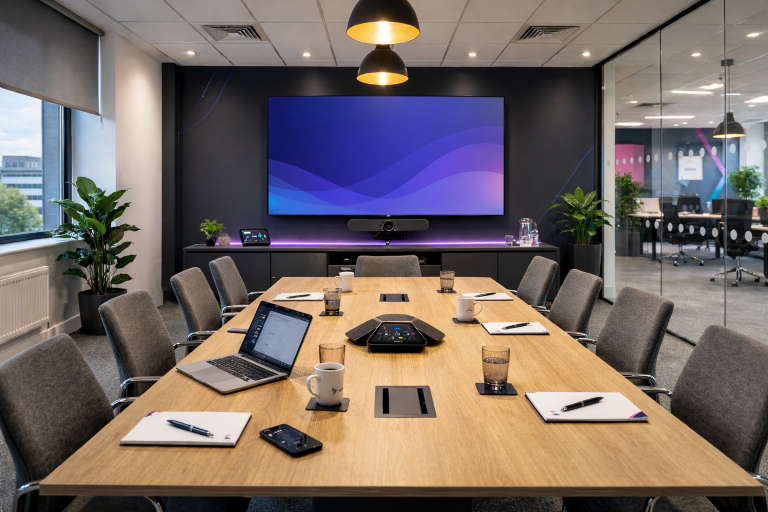
This is where dedicated meeting room systems such as Microsoft Teams Rooms or Zoom Rooms play an important role, providing professional audio and video experiences that allow remote attendees to feel included in the conversation.
-
Faster Decision-Making
Video meetings allow teams to discuss challenges and opportunities in real time, significantly accelerating the decision-making process.
Instead of waiting for email responses or scheduling in-person meetings, leaders and stakeholders can connect quickly and resolve issues during a single call.
This agility is particularly valuable in fast-moving industries where quick responses are critical.
Real-time discussions also reduce misunderstandings, ensuring everyone leaves the meeting with a clear understanding of the next steps.
-
Improved Employee Engagement
Video conferencing can significantly improve employee engagement, particularly for distributed teams.
Seeing colleagues on screen helps build stronger relationships and creates a sense of connection that audio-only communication cannot replicate.
Regular video meetings can help:
- Reduce feelings of isolation among remote employees
- Encourage participation in discussions
- Improve team cohesion
- Strengthen workplace culture
For organisations embracing hybrid working, maintaining employee engagement through video communication is essential.
-
Global Collaboration Without Geographic Barriers
Video conferencing allows organisations to collaborate globally without needing physical offices in every region.
Teams can easily work with:
- International clients
- Global partners
- Remote employees
- Overseas suppliers
This flexibility opens new opportunities for businesses to expand their reach and work with talent from anywhere in the world.
It also allows organisations to operate more efficiently by connecting teams across different time zones and locations.
-
More Efficient and Structured Meetings
Video meetings are often more efficient than traditional in-person meetings.
With built-in collaboration tools and structured meeting environments, discussions tend to stay focused and productive.
Additional benefits include:
- Screen sharing for presentations
- Recording meetings for later review
- Easy sharing of files and documents
- Clear visual communication
Recording meetings can also be valuable for organisations that need to document discussions or share information with colleagues who could not attend.
-
Powerful Training and Knowledge Sharing
Video conferencing has become a powerful tool for training, onboarding, and knowledge sharing within organisations.
Businesses can host:
- Remote training sessions
- Interactive workshops
- Virtual onboarding programmes
- Company-wide presentations
Many video conferencing platforms also support breakout rooms, polls, and Q&A features, making virtual training more engaging and interactive.
Recorded sessions can also be reused as learning resources, helping organisations scale their training programmes more efficiently.
-
Environmental Benefits and Sustainability
Reducing business travel does not just save money it also contributes to sustainability goals.
By replacing physical meetings with video conferencing, organisations can significantly reduce their carbon footprint.
Environmental benefits include:
- Lower travel-related emissions
- Reduced office resource usage
- More sustainable business operations
For companies focused on environmental responsibility and ESG initiatives, video conferencing can play an important role in achieving sustainability targets.
Choosing the Right Video Conferencing Solution
While video conferencing platforms are widely available, achieving a high-quality meeting experience requires the right technology in your meeting rooms.
Many organisations struggle with issues such as:
- Poor audio quality
- Inadequate camera coverage
- Difficult meeting room setup
- Inconsistent user experiences
Investing in purpose-built meeting room solutions can transform how teams collaborate.
Examples include:
Microsoft Teams Rooms
Dedicated Teams meeting room systems that allow users to start meetings with a single touch while benefiting from intelligent cameras, high-quality microphones, and seamless collaboration tools.
Zoom Rooms
Zoom Rooms provide a simple and reliable meeting experience with integrated hardware, making it easy to host professional video meetings in any meeting space.
BYOD Meeting Rooms
Bring Your Own Device (BYOD) solutions allow users to connect their laptops to meeting room cameras, microphones, and displays, providing flexibility for organisations that use multiple platforms.
Designing Meeting Rooms for Better Collaboration
Technology is only one part of a successful video conferencing environment.
Meeting room design also plays an important role in creating an effective collaboration experience.
This includes:
- Selecting the right cameras and microphones
- Choosing appropriate display sizes
- Ensuring optimal room acoustics
- Providing easy connectivity for users
Working with experienced video conferencing specialists ensures organisations deploy solutions that deliver reliable, high-quality meetings every time.
Transforming Collaboration with the Right Expertise
Video conferencing is no longer just about connecting people it is about creating environments that enable teams to collaborate effectively.
At VideoCentric, we help organisations design and deploy professional video conferencing solutions tailored to their specific needs.
Our services include:
- Video conferencing consultancy
- Meeting room design and installation
- Microsoft Teams Rooms and Zoom Rooms solutions
- BYOD collaboration systems
- Managed services and ongoing support
By combining the right technology with expert design and integration, businesses can create meeting spaces that support modern hybrid working.
Video conferencing has become an essential tool for modern organisations.
From reducing travel costs and increasing productivity to enabling hybrid working and global collaboration, the benefits of video conferencing are clear.
However, to unlock the full potential of video collaboration, organisations need more than just software they need well-designed meeting spaces and reliable technology that delivers a seamless experience for every participant.
By investing in the right video conferencing solutions, businesses can improve communication, strengthen teamwork, and support the evolving needs of the modern workplace.
Video Conferencing Statistics
The growth of video conferencing has accelerated significantly in recent years as organisations adopt hybrid working models.
Key statistics include:
- Over 80% of businesses now use video conferencing for team collaboration
- Employees attend an average of 10+ virtual meetings per week
- Businesses can reduce travel costs by up to 30% using video conferencing
- Hybrid work adoption has increased dramatically since 2020
- Video meetings are now considered a core business communication tool
These trends highlight how video conferencing has become an essential part of modern workplace technology.